Facts and Statistics









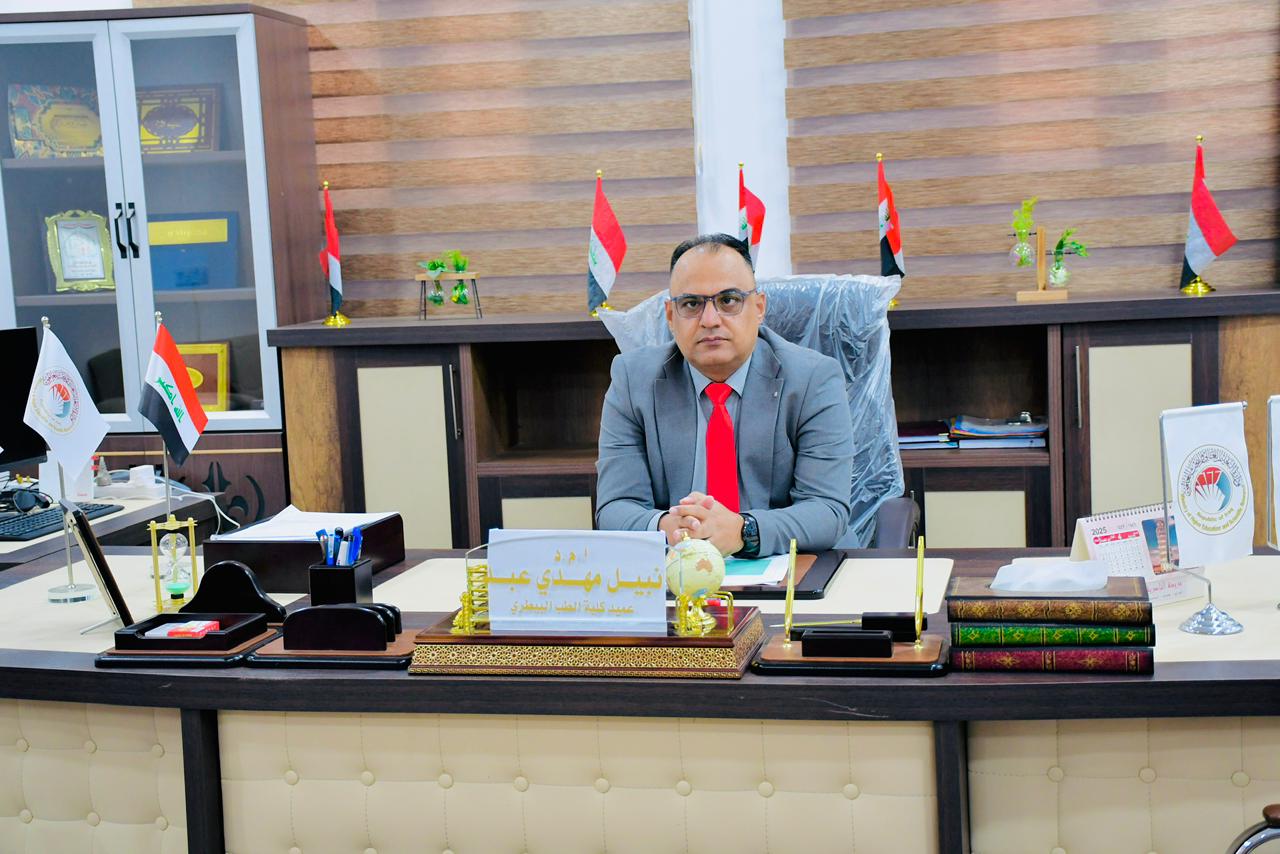
عميد الكلية
Dean of the College Assistant Professor Dr. Nabil Mahdi Abd
Welcome to the College of Veterinary Medicine!
My dear colleagues and students,
On behalf of myself and all the faculty members and staff of the College of Veterinary Medicine, I am delighted to extend a warm welcome to you at the start of our new academic year—whether you are new students embarking on your exciting journey in this noble field, or returning students continuing your path toward excellence.
You have chosen a profession of utmost importance and great responsibility. Veterinary medicine is not merely about treating animals; it is the first line of defense for public health, ensuring food security, and preserving the environment and biodiversity. You are preparing to become active members of your community, carrying the responsibility of caring for living beings and advancing scientific knowledge.
We encourage you to be active and engaged students. Take advantage of the opportunities available in student activities, research, and conferences, and build a strong professional network. Remember that success in this field requires a deep passion for animals, perseverance, and a commitment to lifelong learning.
The future of veterinary medicine begins with you. I wish you all an academic year filled with achievement and success, and a prosperous scientific and professional journey.
With the highest respect and appreciation.
Dean of the College Assistant Professor Dr. Nabil Mahdi Abd
College of Veterinary Medicine
Historical Background of the College
The College of Veterinary Medicine / University of Dhi Qar, located in Al-Shatra District, was established on July 18, 2014 with a single department: Anatomy and Animal Management. Two years later, the departments of Physiology and Pharmacology and Microbiology were introduced. The university presidency and the college administration are working diligently to establish postgraduate studies with the aim of developing the college to higher academic levels.
The college seeks to prepare specialized scientific staff in veterinary sciences to contribute to the prevention, diagnosis, and treatment of animal diseases, as well as to establish proper foundations for preserving and developing livestock resources and planning for increased production. It also contributes to public health by combating zoonotic diseases (transmitted between humans and animals) and monitoring food of animal origin. In addition, the college organizes health awareness campaigns.
Other tasks include supplying institutes, research centers, and food industries with specialized veterinary cadres, as well as providing advisory and therapeutic services to animal and poultry owners and related government departments through scientific consultations within the college. To achieve these goals, the college prepares the necessary curricula, specialized laboratories, and all essential resources to qualify students to perform the duties expected of veterinarians.
*** Admission Inputs
- Students are admitted to the College of Veterinary Medicine exclusively from graduates of the scientific branch of secondary school.
- Admission is restricted to graduates of the current academic year through central admission, according to the regulations and instructions set by the Ministry of Higher Education and Scientific Research.
- Acceptance is based on the annual admission averages determined for each academic year.
*** Learning Outcomes
- Preparing cadres of veterinarians specialized in veterinary medicine and surgery.
- Contributing to the diagnosis, treatment, and prevention of animal diseases to safeguard livestock health, development, and productivity.
- Playing a vital role in combating zoonotic diseases that affect both humans and animals.