


Scan with a phone camera to open the article. Suitable for posters and notices.
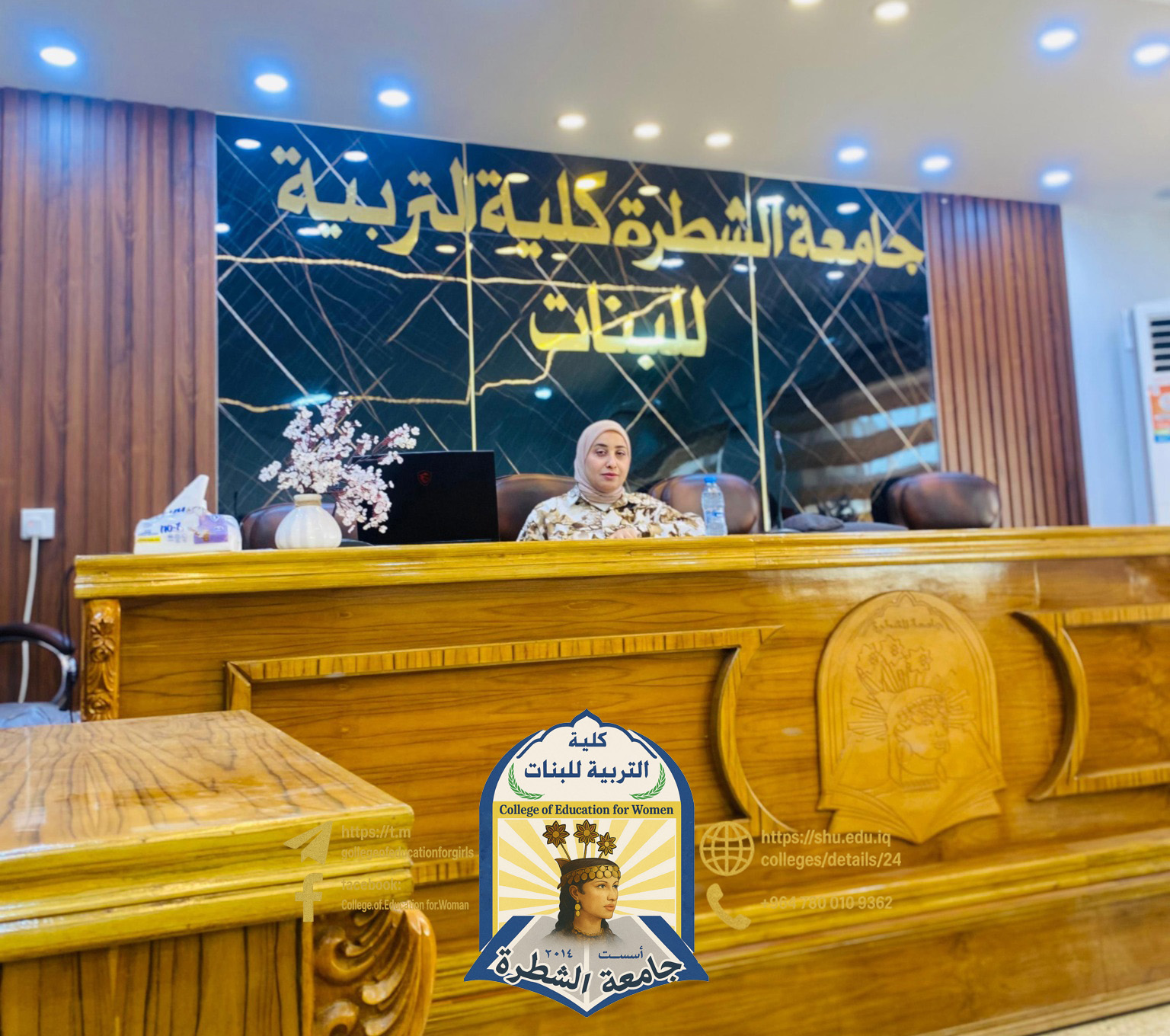
Under the patronage of the Office of the Prime Minister / the National Committee Supporting Community Awareness and Guidance, and under the direct supervision of the President of the University of Shatrah, Prof. Dr. Basim Abdul-Hussein Jarallah, and the Dean of the College of Education for Girls, Prof. Dr. Afrah Abd Al-Maktouf, the Department of Qur'anic Sciences and Islamic Education at the College of Education for Girls – University of Shatrah organised a scientific workshop entitled «The Scourge of Drugs: Its Repercussions and Ways to Address It», at ten o'clock on the morning of Wednesday, 19/11/2025, in the College's Discussion Hall, moderated by Asst. Prof. Dr. Ali Khalid Hamid, Head of Department.
The workshop introduced the concept of drugs, the causes of their spread and the ways in which they are transmitted, and the researcher also highlighted their most significant harms and repercussions for the individual, society and the state. The researcher relied on official statistics presented through tables and charts showing the rapid rise in the prevalence of this scourge in recent years, particularly in the regions of southern Iraq.
The tables and data included precise statistics on the proportions of users according to a number of indicators, including:
1. Gender (males and females)
2. Age groups
3. Marital status of users
4. Social background (governorate centre – district – sub-district – countryside)
5. Educational levels
6. Economic status of users' families
7. Occupations
8. Nature of the residential area
9. Types of narcotic substances
10. Sources of obtaining money
11. Influence of the social environment
12. Sources of obtaining drugs
13. Motives for drug use
14. Factors contributing to the spread of drugs
15. Health problems experienced by users
At the conclusion of the workshop, the researcher presented a set of recommendations and proposed solutions to curb this dangerous phenomenon, starting with the role of the family and ending with the responsibilities of all state institutions.