

Scan with a phone camera to open the article. Suitable for posters and notices.
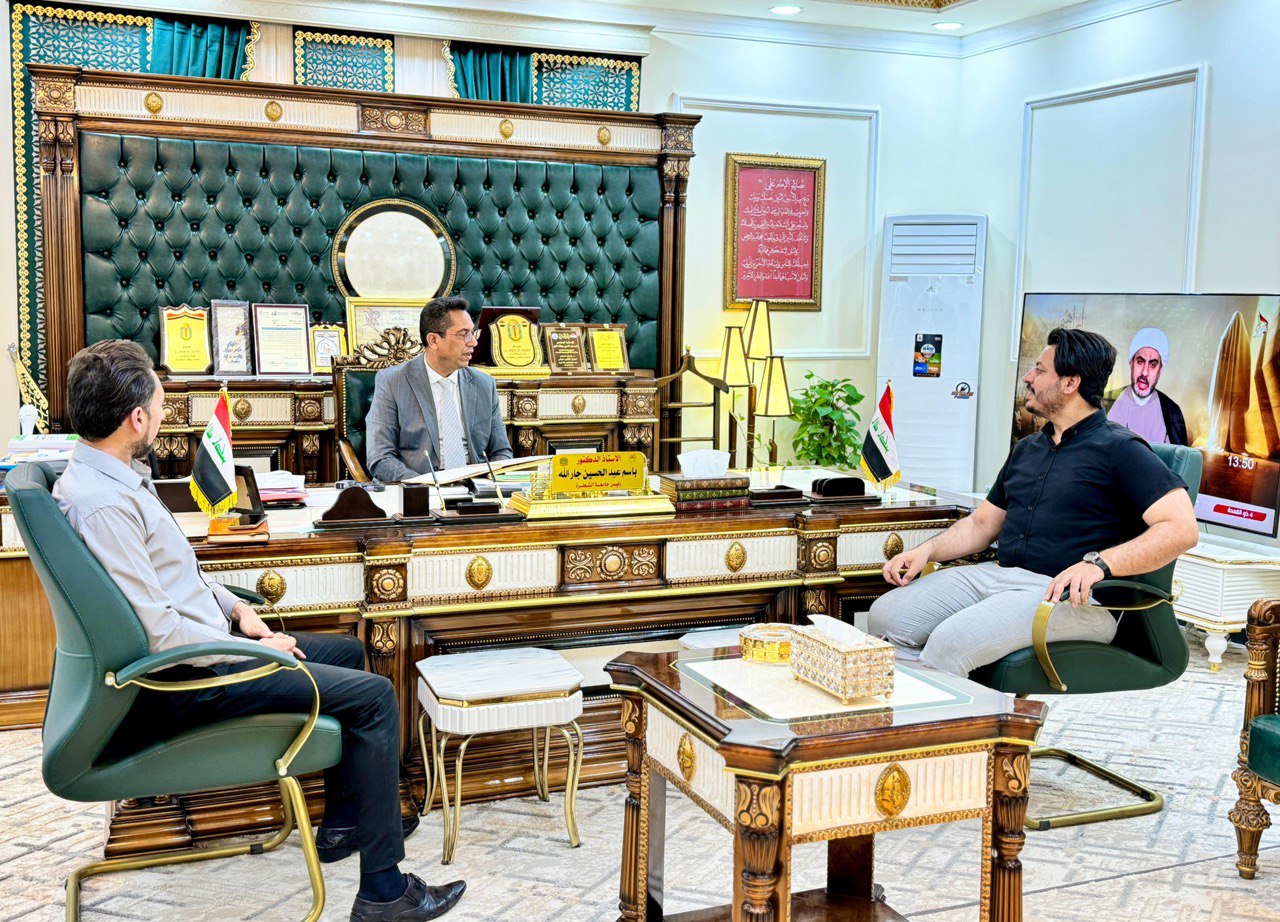
The President of the University of Shatrah, Prof. Dr. Basim Abdul-Hussein Al-Ghazi, took part in the distinctive panel discussion held by the Technical Institute of Al-Shatrah entitled: (Pollution of the Euphrates and Gharraf Rivers in Dhi Qar Province by Sewage and Drainage Waste: Challenges and Proposed Solutions), within the framework of growing interest in environmental issues and raising community awareness.
The seminar was attended by a large number of official and academic figures, led by Member of the Iraqi Council of Representatives Dr. Ali Sabir Al-Kinani and the Chairman of the Dhi Qar Provincial Council, Mr. Izzat Al-Nashi, together with Prof. Dr. Najm Abd Tarish, representative of UNESCO, as well as a large number of directors of government departments, heads of civil society organisations, university professors and academics.
The seminar opened with a recitation of verses from the Holy Qur'an, followed by the reading of Surat Al-Fatiha for the souls of the martyrs. The Dean of the Technical Institute of Al-Shatrah, Prof. Dr. Muwaffaq Abdul-Aziz Al-Hasnawi, then delivered a welcoming speech in which he expressed the importance of shedding light on the environmental challenges affecting citizens' lives, stressing the need to combine scientific and institutional efforts to find effective solutions to reduce the pollution of water resources and preserve them for future generations.
The seminar included scientific lectures delivered by Dr. Najm Abd Tarish, member of UNESCO, and Dr. Ali Sabir Al-Kinani, Member of the Iraqi Council of Representatives, who discussed the main environmental challenges facing the Euphrates and Gharraf rivers as a result of pollution by sewage and drainage waste, in addition to presenting a set of proposed solutions and remedies to curb this phenomenon.
This seminar is part of a series of activities aimed at raising environmental awareness and highlighting the importance of protecting water resources as one of the most important pillars of sustainable development in Dhi Qar Province.