
Scan with a phone camera to open the article. Suitable for posters and notices.
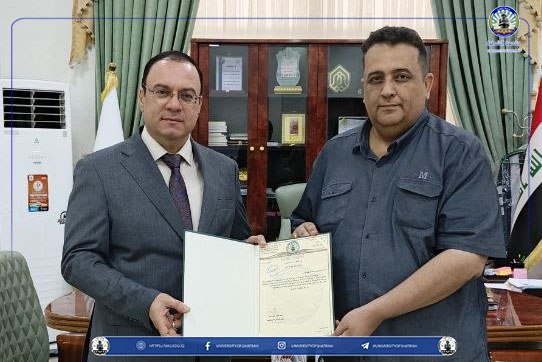
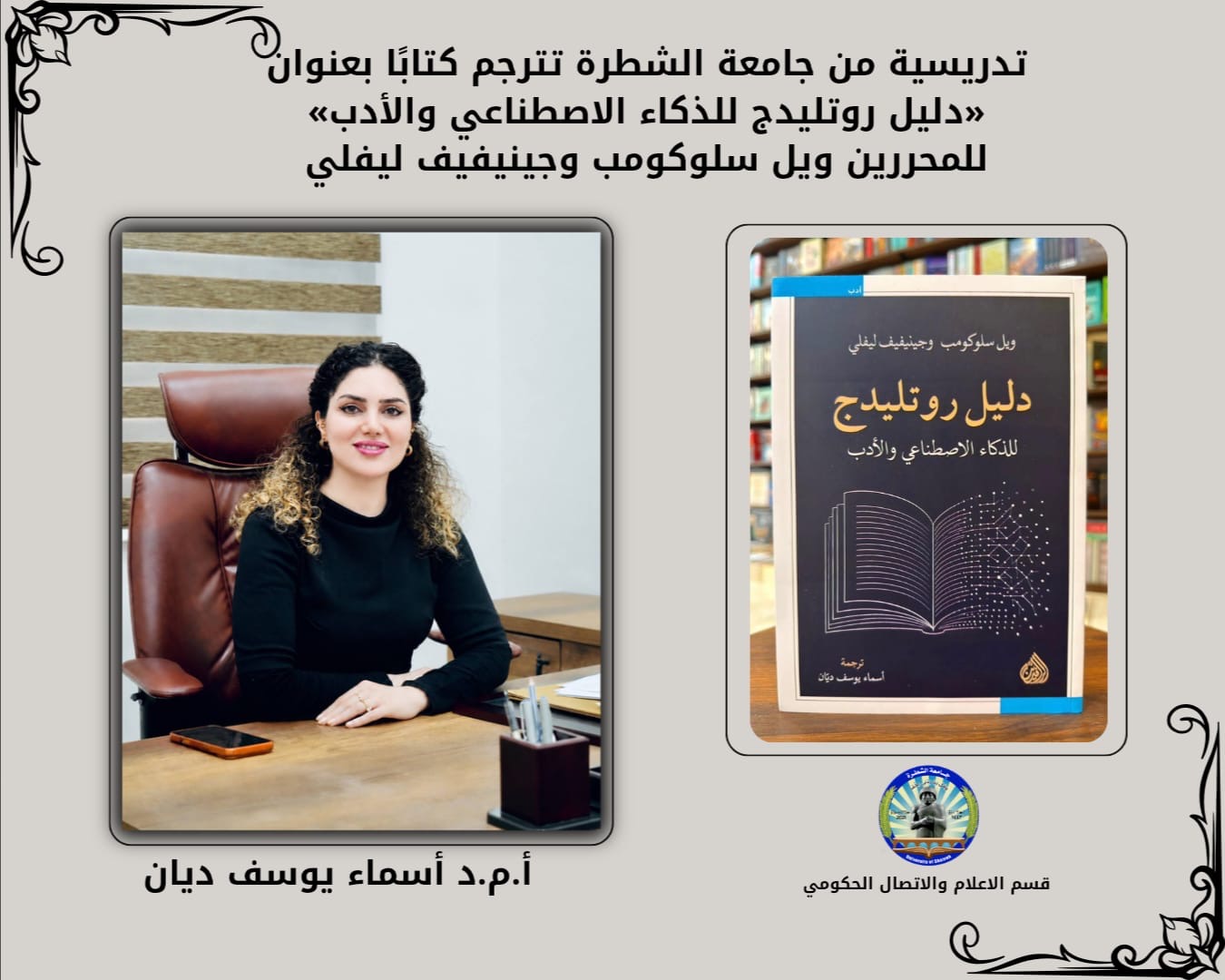
Asma Youssef Dayan, a professor at the College of Education for Girls, has released her Arabic translation of the book “The Routledge Guide to Artificial Intelligence and Literature,” by editors Will Slocombe and Genevieve Leavell, which examines the growing relationship between artificial intelligence and literature, and the questions raised by modern technologies about the nature of creativity, writing, and the future of literary text.
The book addresses a number of intellectual and literary issues related to the relationship between writer and machine, creativity and algorithm, and human and computer text, through about thirty chapters written by researchers from various specializations, including narratives, digital humanities, computer science, and applied ethics.
The guide discusses the impact of major linguistic models, such as GPT models, in producing texts that mimic human writing, asking whether the texts produced by these models can be considered literature or merely a simulation of it, as well as examining the concept of intentionality in the absence of machine awareness, and the relationship between language and intelligence in the era of algorithmic generation, which now allows the production of texts that appear “smart” without the intervention of a human mind in the process of producing them.
The book is distinguished by its multi-disciplinary specializations and approaches, as it combines studies of poetry, science fiction, and narrative analysis, in addition to technical approaches to transformer structures, story generators, and algorithms. It also extends to the study of classical literature and machine-generated poetry, in an attempt to re-read and reinterpret the literary heritage through algorithmic tools.
The Arabic translation of the book presents its content to the Arab reader, opening the way for researchers and those interested in literature and artificial intelligence to see the latest discussions related to the intersection between technology and literary studies, and contributes to enhancing the dialogue about the transformations that artificial intelligence technologies impose on the concept of literature, creativity, and writing.