

Scan with a phone camera to open the article. Suitable for posters and notices.
Symbolism, Addiction and Moral Decline in Oscar Wilde's Novel «The Picture of Dorian Gray»
Symbolism, Addiction, and Moral Decline in Oscar Wilde’s The Picture of Dorian Gray
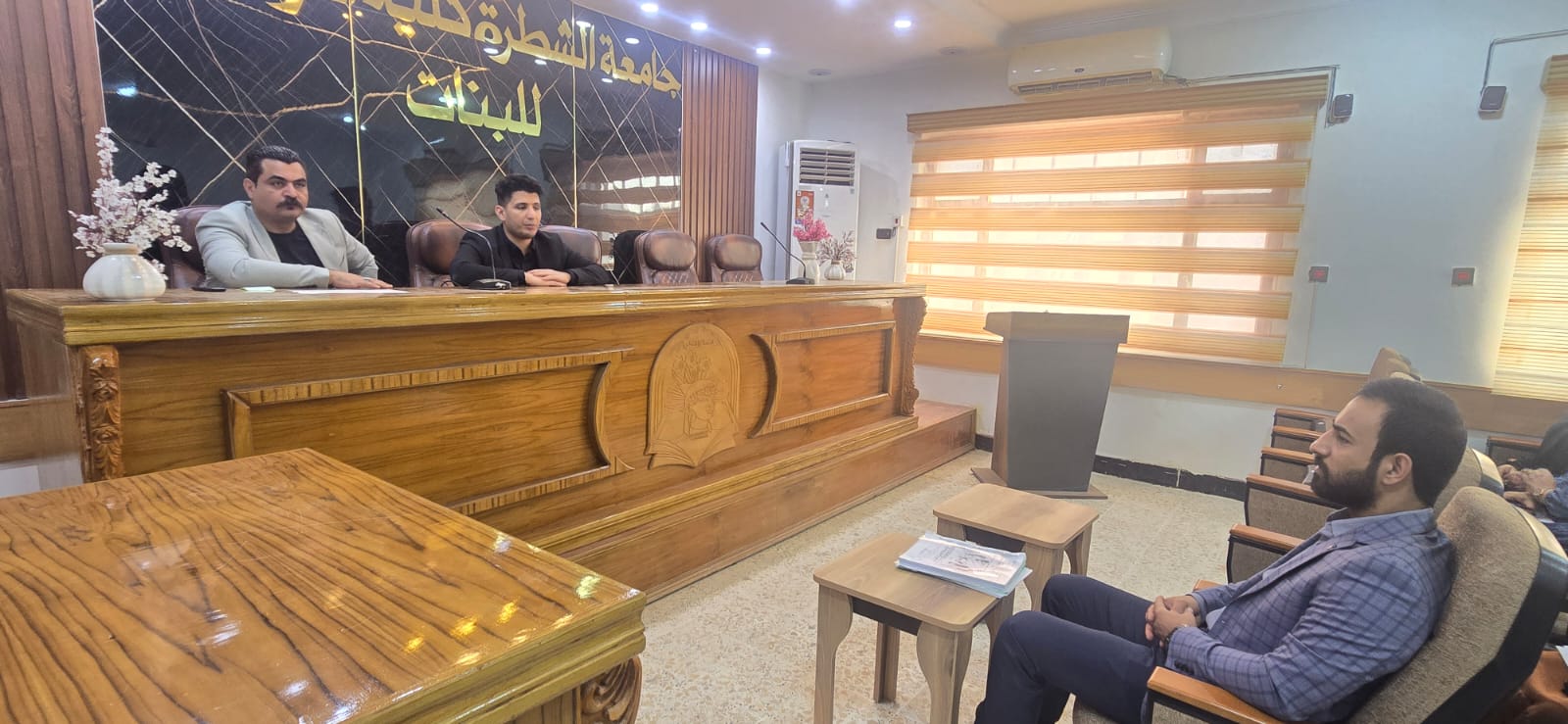
Under the sponsorship of the Office of the Prime Minister / National Committee for Supporting Community Awareness and Guidance, and under the direct supervision of the President of the University of Shatrah, Prof. Dr. Basim Abdul-Hussein Jarallah, and the Dean of the College of Education for Girls, Prof. Dr. Afrah Abd Al-Maktouf, the Department of English Language, in coordination with the College of Fine Arts, held a specialised academic workshop addressing the symbolic, artistic and psychological aspects of Oscar Wilde's novel The Picture of Dorian Gray, particularly in relation to the depiction of addiction, the harms of narcotic substances and their moral and social repercussions.
The workshop was held in the presence of the Head of the Department of English Language, Asst. Prof. Dr. Rafie Muhsin, andthe Department Rapporteur, Mr. Asaad Abdul-Ridha, and a group of lecturers, including:
-
Asst. Lect. Mohammed Kareem Ali – Department of English Language
-
Asst. Lect. Ali Talib Khayoon – College of Fine Arts
along with a number of teaching staff and students interested in literary and artistic affairs.
The workshop discussed the structure of symbolism in the novel and how Wilde embodied psychological conflict and moral decline through the relationship between Dorian and his portrait, whose features erode the more he becomes entangled in addiction and sin. The lecturers highlighted Wilde's use of the concept of addiction in its psychological and behavioural dimensions, and linked it to the phenomenon of substance abuse as a path leading to loss of identity, disturbance of values and the destruction of social bonds.
The workshop also addressed the Gothic artistic style that characterises the novel, and how it blends visual art with symbolic narrative to offer a critical view of the effects of addiction on the individual and society, in line with the objectives of nationally supported awareness and guidance programmes.
At the close of the workshop, those present affirmed the importance of using world literature and the arts to enhance community awareness, particularly with regard to drug prevention and confronting the dangers of moral degradation, stressing the role of the university in producing a responsible and influential cultural discourse.


